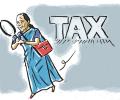
'When you need to revive the economy, when you need to revive aggregate demand, you cut taxes.' 'But what's this government doing?' 'It's increasing taxes for the middle class and the vast majority of the poor on fuel, which has a ratchet effect on most other products.'

Companies from Unilever to Proctor & Gamble, Nestl, Coca-Cola and PepsiCo have all alluded to lockdown challenges in India and the globe as well as the impact it will have on April-June as well as full-year numbers.

From the peak of $3.67 trillion in January, India's market cap has eroded by $676 billion amid rising bond yields and a record-breaking sell-off by overseas investors.

Have the markets already played out their dynamics before the economy has even properly taken off? Are we now destined for a period of mediocre returns despite a strong economy? asks Akash Prakash.

India's biggest firm, Reliance Industries, has decided to cut salaries by 10 per cent in its oil and refining divisions. Several smaller companies like Kajaria Ceramics have followed suit with cuts as high as 40 per cent for those earning more than Rs 50 lakh.

Young investors could allocate in the proportion of 70:20:10 to equity, debt and gold.

Besides, Toyota and MG Motor also reported nil sales as they suspended operations even before the imposition of lockdown on March 25 to check the spread of coronavirus. In two-wheeler segment, niche bike maker Royal Enfield said it had zero sales in the domestic market but exported a total of 91 units last month.

E-commerce companies have said they are well prepared and working closely with delivery partners to ensure smooth and safe delivery of packages in Maharashtra where the government has announced a slew of restrictions, including night curfews and weekend lockdown to control the spike in COVID-19 cases. However, there are concerns around the mandate for delivery staff to be either vaccinated or carry a negative RT-PCR report. According to the health ministry data, till 8 am on Tuesday Maharashtra's COVID-19 caseload was 452,777 with an addition of 20,881 from the previous day. In an order on Sunday, the Maharashtra government said all personnel belonging to home delivery services will have to be vaccinated and in case they are not vaccinated, they will have to carry a negative RT-PCR report.

Campa is set to take on its competition, which pushed it out of the aerated drinks business in the late 1990s, but this time with a new owner - Reliance Industries. Campa's entry comes at a time when aerated drinks as a category is already saturated. But experts say this could give rise to competition in the segment, eventually causing the space to grow.
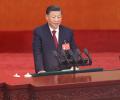
'No Cold War should be reignited and no Ukraine-style crisis should be repeated in Asia'

The industry is keeping a close watch to see if shuttered factories in China reopen in the coming days and supplies resume sometime this week.

The sweeping economic sanctions on Russia - the second largest producer of crude oil - following its invasion of Ukraine late last month can cull global and domestic growth along with the added pains of higher inflation and currency depreciation, RBI Deputy Governor Michael Patra has said. And if the war lingers on, it can even lead to deglobalisation and even a recession, he added. The ongoing war has only added a whole new dimension to the outlook, and in fact, a weighty downside, Patra said in a lecture at the industry lobby IMC on Friday evening.

Online play is a priority now -- so far unthinkable in a business that's all about a meaningful interface with kirana stores.
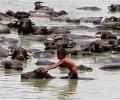
Livestock auctions remained on hold for the majority of the lockdown as there was no clarity on the matter.

The annual threat assessment of the US Intelligence Community released by the Office of Director of National Intelligence (ODNI) also said that the 'expanded military posture by both India and China along the disputed border elevates the risk of armed confrontation between two nuclear powers that might involve direct threats to US persons and interests and calls for US intervention'.

Customers may have to wait three to four weeks to get their hands on Apple Inc's iPhone 6 Plus, after a record number of orders for the company's latest smartphones strained available supply.
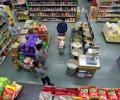
Notwithstanding the inflation pinch, analysts believe the Indian retail sector is on the 'cusp of accelerated earnings growth' as consumer sentiment and discretionary purchases bounce back from the Covid-19 pandemic. "The shift in consumer preference from the unorganised sector to the organised, coupled with uptick in domestic demand as people resume work from office, will cheer the Indian retail sector," says Nishit Master, portfolio manager, Axis Securities. Shopping malls are witnessing increased footfall in lower tier towns and standalone stores as consumption picks up and mobility improves.

The government will chart out a plan for the evacuation of seafarers stuck on international waters amid the Covid-19 pandemic, Union Minister Mansukh L Mandaviya has said. Thousands of Indian seafarers are currently stuck aboard cruise ships and cargo vessels in far off waters, and maritime bodies have been demanding from the government strategies for bringing them home fearing that delays might result in disruption in supply chain.
Organisations are focusing on how they are going to be much more nimble, much more innovative and that is the ticket to success, Mark Goodburn tells Sangeeta Tanwar

In a double delight, retail inflation eased to a one-year low of 5.72 per cent - staying below the upper tolerance limit for two months in a row, while factory output rose sharply to 7.2 per cent on the back of healthy growth in manufacturing. The retail inflation numbers based on Consumer Price Index (CPI) will provide some room for the Reserve Bank to further moderate the quantum of hike in key interest rate or even press a pause button. The RBI has been on a rate hiking spree since May 2022 in its bid to tame inflation, having raised the repo rate by a cumulative 225 basis points (bps).
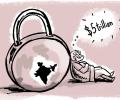
India is much better placed today to deal with future waves of the pandemic relative to the first wave, RBI deputy governor Michael Patra said.

The government is drawing up a relief package for industry with steps such as relaxation of asset-classification norms by banks, thus allowing companies to delay the repayment of loans, and tax holidays for the worst-hit sectors like aviation and hospitality. But it might not be enough to stop more bankruptcies from getting filed.

On November 12, 2021, the Reserve Bank of India (RBI) decided to ring in uniformity in asset classification and income recognition across all lending institutions. Shadow banks, or non-banking financial companies (NBFCs), like commercial banks, are to test non-performing assets (NPAs) on a daily basis and upgrade them to "standard assets" only when interest and principal arrears are settled by borrowers. This is going to create all manner of headaches for shadow banks and their clientele. Says Y S Chakravarti, managing director and chief executive officer (CEO), Shriram City Union Finance: "NPA levels will go up, especially of small borrowers.

Stating that an economic recession gripped global economy following the lockdowns due to COVID-19 pandemic, Fitch Ratings on Friday said the initial disruptions to regional manufacturing supply chains in China have now broadened to include local discretionary spending and exports.
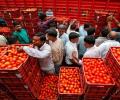
All India average retail tomato price, which has shot up by 63 per cent to Rs 67 per kg over the last year due to unseasonal rains, are likely to soften from December with the arrival of fresh crop from northern states, the government said on Friday. In the case of onions, retail prices have substantially subsided below to the level that prevailed in 2020 and also 2019, it said. "Tomato arrivals from north Indian states will start from the beginning of December itself, which will add to availability and lead to fall in prices.

The applications range from disaster recovery to predicting demand and understanding customer choices using artificial intelligence.

Referring to how unified Washington Allies have been in isolating President Putin, Biden stated, "...The Quad is, with the possible exception of India being somewhat shaky on some of this, but Japan has been extremely strong -- so has Australia -- in terms of dealing with Putin's aggression."

India lost its competitive advantage as China gave fiscal benefits to its local manufacturers. Besides, recent policy flip-flops have, however, dented India's image as the 'pharmacy of the world'.

India's economy will do well once vaccination reaches a critical mass as pent up demand, global recovery and easy financial conditions will boost activities, RBI's Monetary Policy Committee (MPC) member Ashima Goyal said on Tuesday.
The UN Conference on Trade and Development (UNCTAD) said in a report on Monday that a lower but positive economic growth in India in the post-Covid-19 pandemic period and India's large market will continue to attract market-seeking investments to the country. The World Investment Report 2020 by UNCTAD said that India was the 9th largest recipient of FDI in 2019, with 51 billion dollars of inflows during the year, an increase from the 42 billion dollars of FDI received in 2018, when India ranked 12 among the top 20 host economies in the world.

The Central Committee members on Sunday elected a 25-member Political Bureau which picked the Standing Committee members to govern the country.

India's factory output climbed 22.4 per cent in March, benefiting from the base effect of the lockdown-marred month a year back as well as a turnaround in the manufacturing sector, while retail inflation slipped to a three-month low of 4.29 per cent in April. The high positive annual growth in the index of industrial production (IIP) in March 2021 came on back of a contraction of (-)0.9 per cent and (-)3.4 per cent in January and February 2021 respectively, according to the data released by the National Statistical Office (NSO) on Wednesday. This turnaround was led by recovery in the mining, manufacturing and electricity sectors.

The G20's Bali Declaration Wednesday acknowledged differences among members on the Russia-Ukraine war but said it was essential to adhere to international law, including protection of civilians caught in conflicts.

Close to 50 models were launched in India in the past 12 months, but companies have not been able to realise their potential due to the pandemic.
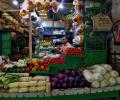
After unseasonal rains, supply disruptions and pandemic-induced woes pushed retail inflation well over the Reserve Bank's comfort zone in 2020, the scenario is likely to stay that way at least in the short term as economic recovery slowly gains foothold. For most part of this year, pricier food items pushed the retail inflation, based on Consumer Price Index (CPI), higher in the range of 6.58-7.61 per cent, except for March when the reading was 5.91 per cent. Experts believe retail inflation is likely to average around 6.3 per cent this fiscal and mostly will remain sticky going forward owing to pick-up in demand across sectors.
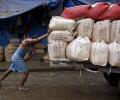
Businesses that are engaged in both taxable and non-GST supply have re-structured themselves into separate entities to avoid elaborate compliance, says Sudipto Dey.
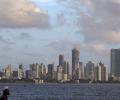
India's economy could prove to be the "most resilient" in the subregion of South and South-West Asia over the long term, according to a report by the UN, which says a positive but lower economic growth post COVID-19 pandemic and the country's large market will continue to attract investments. The report titled 'Foreign Direct Investment Trends And Outlook In Asia And The Pacific 2020/2021', and compiled by United Nations Economic and Social Commission for Asia and the Pacific (UNESCAP), stated that inward FDI flows to South and South-West Asia slightly decreased by 2 per cent in 2019, from $67 billion in 2018 to $66 billion in 2019. The growth, however, was mainly driven by India, which accounted for 77 per cent of the total inflows to the subregion and received $51 billion in 2019, up 20 per cent from the previous year.
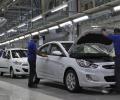
Major automobile manufacturers like Maruti Suzuki, Hyundai, Mahindra & Mahindra, Tata Motors and Toyota Kirloskar on Tuesday reported decline in domestic passenger vehicle sales in May compared to the previous month as a spike in COVID-19 cases and lockdowns across various states hit production and dispatches. The country's largest carmaker Maruti Suzuki India (MSI), which shut production from May 1 to May 16 so as to divert oxygen from industrial use for medical purposes, reported domestic dispatches to dealers at 35,293 units last month, down 75 per cent from 142,454 units in April. The company said sales of its mini cars, comprising Alto and S-Presso, declined by 81 per cent to 4,760 units in May as against 25,041 units in April this year.

According to industry experts, companies in sectors such as consumer durables (fans, air-conditioners), power cables and the electrical industry will be hit, given that they are big users of copper.

They realised that the Portuguese were better prepared to defend Daman than Dadra and Nagar Haveli. If reinforcements from Daman were to reach Silvassa, there was no chance of defeating the Portuguese. They decided that cutting Daman's communication lines would have to be their top priority before attacking Silvassa. A fascinating excerpt from Neelesh Kulkarni's new book, Uprising-The Liberation of Dadra and Nagar Haveli.
